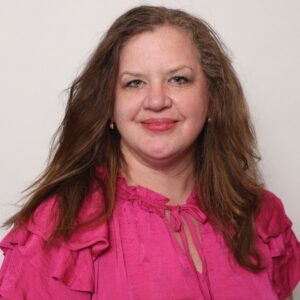

This editorial was featured in the May 1, 2026 edition of The Reflector.
The job market has changed, and unfortunately, not in the way we hoped. Technology was supposed to democratize opportunity: anyone could apply to any company, and a recruiter might just notice them. That promise is fading fast.
Today, job seekers use bots to apply to thousands of positions daily. Recruiters, overwhelmed by the volume, respond by closing applications within days, sometimes within hours of being open. And when they do screen candidates, they increasingly rely on their own algorithms to filter the pile. The result? Applicants don’t know what the system is looking for, and the “fair chance” the internet once offered has quietly disappeared.
What has replaced it is something older and more familiar: referrals. In many cases, a position is filled through someone’s network before it ever reaches the open market. The job posting, when it appears at all, is often a formality.
Now more than ever, networking matters. And as IEEE members, we have a real advantage: chapters, sections, and affinity groups full of people with shared interests who can help each other open doors. We need to use that. Not just for those looking for opportunities right now, but as preparation for all of us. AI-driven change is only beginning, and the ability to pivot quickly depends on having a strong network before you need it.
So here’s a concrete challenge: commit to attending at least one IEEE event per month, and at least twice a year, make it an event outside your usual technical area. At every event you attend, connect with at least three new people; get their email or LinkedIn. By the end of the year, you’ll have 24 new connections, 24 different perspectives, 24 potential referrals. Let’s commit to that together. If you see me, tell me how many people you met, and that you went out of your comfort zone. I will do the same, we can share tips…
If you lead a chapter, take this seriously. Host social events. Partner with other chapters. Invite people from outside your usual circle. Our members need strong networks — let’s help them build one.
IEEE Region 1 awards nominations are currently open. If you know a volunteer doing outstanding work, nominate them: https://ieee.secure-platform.com/a/solicitations/1396/home
Last month, on March 22, we held the second Boston Section Awards Ceremony since COVID, at the Joyce Cummings Center at Tufts. Around 80 members gathered to celebrate fellows, awardees, and dedicated volunteers — with drinks, good food, and warm conversation. We were honored to welcome IEEERegion 1 Director Charles Rubenstein and Fred Schindler.
This was a wonderful celebration — and a revealing one. The entire IEEE Boston Section was invited; we sent multiple reminders to over 7,500 members. Around eighty people came. That’s an attendance rate of roughly 1% for a free event with food, drinks, and parking.
That number says something. Many of us haven’t yet internalized that socializing is an investment in ourselves, not a luxury. I hope this gives us all pause, and that next year, we prove that number wrong together.
IEEE MEDAL RECIPIENTS
IEEE Medals are awarded for exceptional contributions or an extraordinary career in IEEE fields of interest, sponsored by the IEEE Foundation.
IEEE MILDRED DRESSELHAUS MEDAL
Sponsored by Google, LLC
“For contributions to computer vision and simulation algorithms, and leadership in developing programs to promote STEM careers.”
IEEE Fellow Karen Panetta, Tufts University
IEEE EDISON MEDAL
Sponsored by the Edison Medal Fund
“For pioneering contributions to biomedical imaging, terrestrial optical communications and networking, and inter-satellite optical links.”
IEEE Fellow Eric Swanson, MIT
IEEE RICHARD W. HAMMING MEDAL
Sponsored by Qualcomm, Inc.
“For contributions to coding for reliable communications and networking.”
IEEE Fellow Muriel Médard, MIT
IEEE MEDAL FOR INNOVATIONS IN HEALTHCARE TECHNOLOGY
Sponsored by the IEEE Engineering Medicine and Biology Society
“For pioneering contributions to wearable affective computing for health and wellbeing.”
IEEE Fellow Rosalind W. Picard, MIT
IEEE TECHNICAL FIELD AWARDS
IEEE INTERNET AWARD
“For groundbreaking contributions and advocacy for an integrated perspective on Internet development.”
David D. Clark, MIT
IEEE KOJI KOBAYASHI COMPUTERS AND COMMUNICATIONS AWARD
“For creative contributions to wireless and network communication and sensing”
Dina Katabi, MIT
IEEE BIOMEDICAL ENGINEERING AWARD
“For leadership in ECG signal processing and global dissemination of curated biomedical and clinical databases, thereby accelerating biomedical research worldwide.”
Roger G. Mark, MIT
2025 BOSTON SECTION FELLOWS
IEEE Fellow is a distinction reserved for select IEEE members whose extraordinary accomplishments in any IEEE field of interest are deemed fitting of this prestigious grade elevation
Yunsi Fei, Northeastern University
“for contributions in side-channel analysis, protection of computing accelerators, and robust security evaluation”
Michael J Jones, Mitsubishi Electric Corporation
“for contributions to computer vision and object detection”
Usman A. Khan, Boston College
“for contributions to optimization and localization in distributed stochastic settings”
Engin Kirda, Northeastern University
“for contributions to improving the security of computer software, systems, and networks”
Na Li, Harvard University
“for contributions to control, learning, and optimization and applications to energy and biomedical systems”
Xiaohui Liang, U. Mass. Boston
“for contributions to IoT Communication and Data Security”
Joseph A Paradiso, MIT
“for contributions to wearable wireless sensing and mobile energy harvesting”
Deqing Sun, Google
“for contributions to computer vision, particularly optical flow and its applications”
Brian Telfer, MIT
“for contributions to machine learning and signal processing for radar and biomedical engineering”
2025 BOSTON SECTION AWARDS
Nominated by members of the Boston Section and chosen by a committee of peers for contributions to the section and to the profession.
2025 Distinguished Service Award
“In recognition of outstanding leadership and sustained service to the IEEE Boston community”
Rabeeh Majidi
2025 Arthur Winston Student Achievement Award
“For exceptional dedication, leadership, and commitment to the IEEE MIT Undergraduate Research Technology Conference”
Lasya Balachandran
2025 Outstanding Volunteer Award
“For her inspiration and dedication to the growth of the
IEEE Microsystems Boston Chapter”
Allison Lemus
2025 Distinguished Member Award
“for exceptional leadership as the Vice-Chair of the IEEE AESS Boston chapter”
Sildomar Monteiro
2025 Boston Section Conference Award
“For outstanding contributions to IEEE Boston Section Conferences”
Jeremy Kepner
2025 Boston Section Conference Award
“For outstanding contributions to IEEE Boston Section Conferences”
Albert Reuther
IEEE Boston Section 2025 Chapter Award
“Chapter with the greatest number of meetings in 2025”
Photonics Chapter
IEEE Boston Section 2025 Chapter Award
“Chapter with the greatest number of meeting attendees in 2025”
Boston BlockChain
IEEE Boston Section 2025 Chapter Award
“Most Innovative Chapter”
Young Professionals
Maira Marques Samary is an Assistant Professor of the Practice at Boston College, where she teaches CS1, CS2, SE and CS Principles. Her research interests include computer science education, collaborative work and software engineering education. She received her M.S. and Ph.D. in computer science from the University of Chile, and has an M.Ed. from Boston College.
Maira is the Past Chair of the IEEE Boston Section, the Chair of the Boston Chapter of Women in Engineering, FusionVision 2026 Local Chair and contributes to IEEE leadership in many other areas.
In her free time, Maira runs marathons, and completed the Boston Marathon just last week.