
This editorial was featured in the July 1, 2026 edition of The Reflector.
On June 5 – 7 IEEE Region 1-2 meeting in Washington DC, a group breakout exercise ended up teaming up with R2 vitality coordinator Stan Telson and yours truly representing R1. The task was to focus on a subset of the MGA Strategic Goals. Out of the three available, the group selected: 1) Increase member engagement and grow membership: Drive recruitment and retention by providing localized value through sections, chapters, and events. After a brainstorm exercise the R1 and R2 volunteers present reached out consensus that developing a focused 18month plan to elevate IEEE member grades at both the Area and Region levels represents a strategic opportunity to strengthen professional engagement and recognize member achievements. With project champions Stan Telson (Region 2) and Ramon De la Cruz (Region 1) guiding this initiative, the effort aims to align leadership, resources, and proven best practices to deliver measurable results.
At its core, member grade elevation—particularly advancement to Senior Member—reflects both individual accomplishment and the vitality of the IEEE community. Yet many eligible members remain unaware of the process or lack the support needed to complete their applications. An 18month roadmap provides the structure to address these gaps stematically. Early phases should prioritize awareness campaigns, leveraging section meetings, conferences, and digital outreach to clearly communicate eligibility criteria and benefits.
A key opportunity for this plan can be the adoption of the Boston Section’s optimized guide to member grade elevation. Known for its practical, step-by-step framework, the guide demystifies the application process. Another opportunity is the great collaboration by Region 1 Rhonda Farrel, Jessica Bian, Kalyani Matey and Boston Section membership development Wig Balasingham and Joe Campbell to identify and create a list of senior members and fellows who are willing to serve as references.
Scaling this approach across Regions 1 and 2 can create consistency while allowing for local adaptation. The agreement was to have the procedures ready to pilot-test by the end of August.
Mid-phase execution should focus on activation—hosting application workshops, pairing candidates with experienced Senior Members or Fellows, and tracking progress through regional dashboards. Champions Telson and De la Cruz can foster cross-section collaboration, sharing lessons learned and recognizing high-performing sections.
The final phase should emphasize completion and recognition, celebrating newly elevated members to reinforce the value of participation. Success metrics—such as application rates, approval ratios, and engagement levels—will guide continuous improvement.
Ultimately, this initiative is more than a membership drive; it is an investment in professional growth, leadership development, and the long-term strength of IEEE.
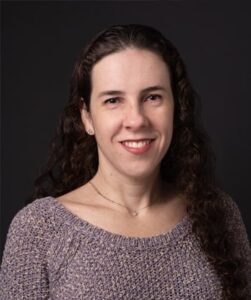
Ramon De la Cruz has more than 25 years in the semiconductor equipment industry as test development and process technical lead, design engineer, subject matter expert and consulting roles. An IEEE Senior member and member of the IEEE-Eta Kappa Nu honor society serves on the IEEE Boston Section as Chair and has served as Vice chair, Treasurer, Secretary, and Member-at-large among other leadership positions. Ramon serves on the ESDA Northeast Board of Directors and has served on the IEEE Boston Reliability chapter as Chair.
He is currently at Teradyne, Inc. New Product Introduction Group (NPI), where he participates in operations strategy workgroups to define processes and methods supporting next-generation system and instrumentation development for current and future Automated Test Equipment (ATE) Platforms.
Ramon holds a B.S. in Electrical Engineering from Iowa State University. His background includes Design for Testability, Process FMEA, Systems and Circuit Analysis, Risk Assessment, and Highly Accelerated Stress Testing.