
Artificial Intelligence in Medicine: Promise, Challenges, and the Role of Engineers and Clinicians Collaborating Together
This editorial is from the December 1, 2025 issue of The Reflector
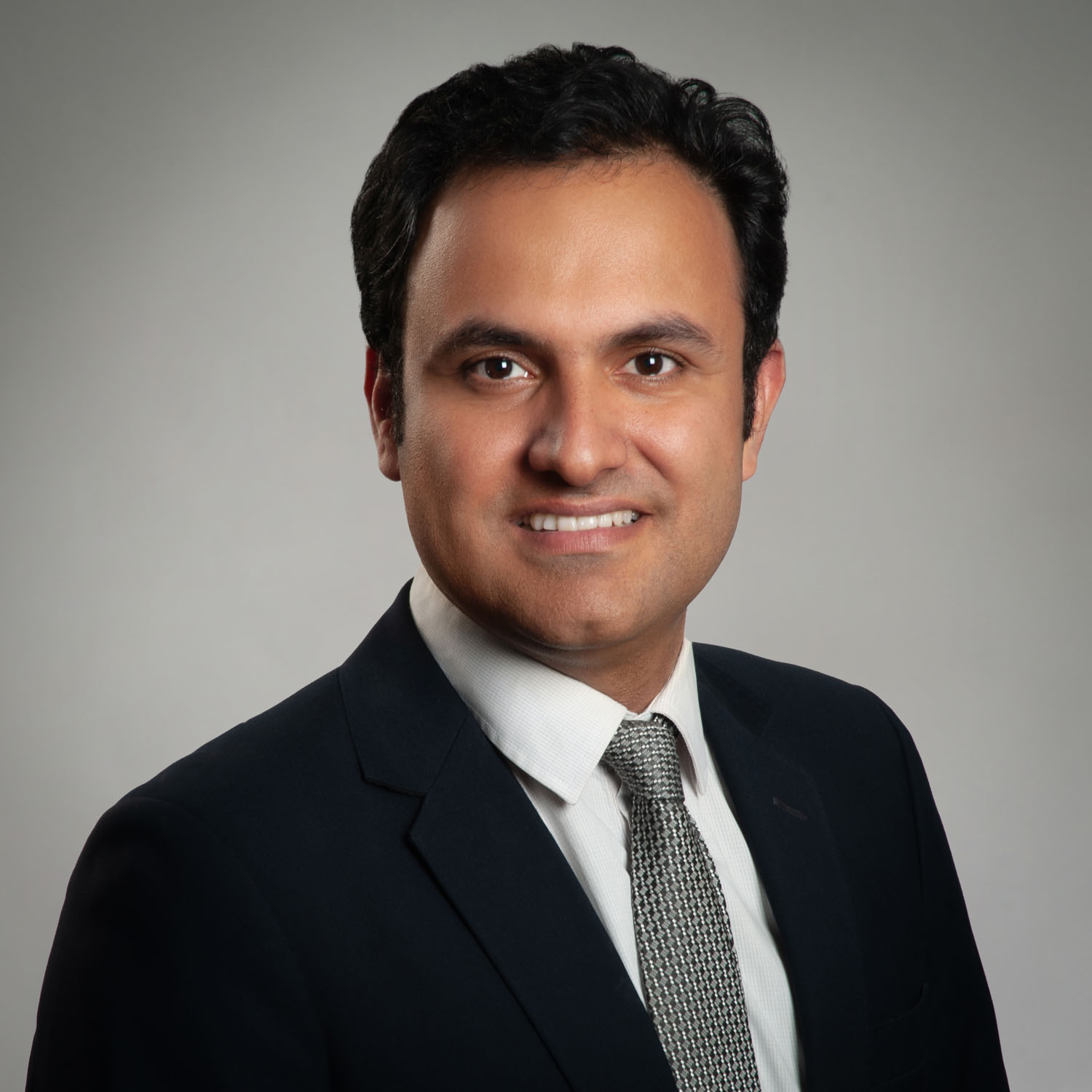
By Farhad R. Nezami, PhD, IEEE Boston Professional Development Co-Chair
Artificial intelligence (AI) is no longer science fiction in medicine; it has become a tangible, fast-moving frontier promising to reshape how we diagnose, treat, monitor and even prevent disease. From early image-analysis systems to today’s generative-AI assistants and data-driven predictive models, the arc of AI in healthcare reflects artful ambition and sober reality. On one hand, AI offers opportunities to augment clinicians, streamline workflows, personalize therapy, reduce cost, and broaden access. On the other hand, its deployment in medicine confronts complex technical, ethical, regulatory, and organizational challenges that must not be underestimated. As we stand at this crossroads, the engineering and medical communities, in particular those of us within the IEEE ecosystem, must frame our role not merely as developers of tools, but as stewards of safe, equitable, effective transformation.
The promise of AI in medicine
AI’s promise is wide-ranging. Machine-learning models have demonstrated high accuracy in detecting pathologies, often expediting triage or enabling detection of subtle features beyond human visual perception. Generative AI has begun to assist in summarizing scientific evidence, enabling both clinicians and patients to engage with knowledge faster. Beyond diagnostics, AI holds promise in personalized medicine. Large data sets mined for patterns of disease progression, treatment response or adverse events can inform tailored therapy plans rather than one-size-fits-all approaches. Also, AI-driven tools can automate routine tasks from administrative workflows to electronic health-record data extraction, liberating human clinicians to engage more deeply in patient-centered care. In global health settings, where specialist resources are scarce, AI-augmented tools may extend the reach of expertise, assisting triage, screening, and monitoring in underserved populations. Furthermore, AI’s capacity to detect patterns in multimodal data offers the tantalizing vision of early prediction and prevention of disease and thereby shifting the paradigm from reactive to proactive care.
The major challenges
While the promise is powerful, the path is fraught with challenges. Data and algorithmic bias is a first concern. AI systems trained on non-representative data risk producing inequitable outcomes. Thus, underserved or minority populations may be mis-classified or undertreated. Lack of transparency and explainability is another. Many high-performing AI models operate as “black boxes,” leaving clinicians and patients uncertain about how decisions are made, which undermines trust and hampers adoption. Integration into clinical workflow remains a stumbling block. A strong algorithm alone does not guarantee success unless it fits into the everyday practices of clinicians, aligns with data systems, and accounts for local context and human factors. Regulatory, legal, and liability issues loom large. Who holds responsibility when an AI-augmented decision goes awry? How will regulatory frameworks evolve to assess safety, efficacy and post-market monitoring of AI tools? Safety, robustness, and generalizability are critical. AI models that perform well in controlled trials may fail in broader, real-world settings where patient populations, data acquisition, and workflows vary widely. Ethical and societal implications, including privacy, consent, autonomy, the risk of automation displacing human judgment, add further complexity. Over-reliance on AI could degrade clinicians’ critical thinking or edge human decision-making into the background. In sum, to realize AI’s promise in medicine we must address not only algorithms, but data quality, infrastructure, workflow fit, governance, human factors, and societal trust.
An engineering-medicine alliance is the way forward
The way ahead requires a collaborative mindset. Engineers, data scientists, and clinicians must co-design AI systems. Systems must be built with human-in-the-loop thinking. AI should augment, not replace, human expertise. Transparency and interpretability must be designed in. Explainable AI frameworks help clinicians understand and trust model outputs; this is especially vital in high-stakes medical domains. Rigorous validation across populations and settings is mandatory. Beyond internal test sets, AI tools must be stress-tested for generalizability, bias, safety, and maintenance over time. Workflow integration matters. Change management, user-centered design, training programs, and incentives must accompany AI deployment. Without this, even strong algorithms may languish unused. Ethics and governance must underpin development. Data governance, patient consent, bias mitigation, audit trails, and liability frameworks must be embedded from the start. Education and professional development become key pillars. Clinicians must be equipped to understand AI’s strengths and limits; engineers must understand clinical constraints and patient-impact. Research and metrics should go beyond accuracy to measure outcomes, and infrastructure and data ecosystem must scale. Together, these form the foundation of responsible AI in medicine.
An angle for IEEE member
As the Co-Chair of Professional Development and Education for the IEEE Boston Section, I believe our membership is uniquely positioned to lead in this transformation. The IEEE offers an ideal bridge between engineering innovation and clinical translation. For our members I suggest three strategic priorities:
- Lifelong learning and cross-disciplinary fluency. Engineers should deepen their understanding of clinical contexts, regulatory frameworks, and health-system workflows. Clinicians should gain literacy in AI, data science, and system design. Through IEEE workshops, webinars, and collaborative forums, we can build that shared language.
- Standards, ethics, and governance. IEEE has historically convened standard setting in novel fields. We must extend this leadership into medical-AI. Developing guidelines for explainability, interoperability, safety validation, data privacy, and human oversight.
- Accelerating translation with responsibility. Many promising AI prototypes never move into real-world practice because of deployment pitfalls, workflow misfit or lack of stakeholder engagement. IEEE members can partner with hospitals, start-ups and health systems to pilot, evaluate and iterate AI applications that are anchored by clinical outcomes, not just algorithmic accuracy. In doing so we marry engineering excellence with patient-centered impact.
Moreover, our Boston region with its rich ecosystem of academic medicine, medical devices, biotech and AI start-ups, is a fertile ground for cross-disciplinary innovation. IEEE Boston can serve as a convenor: hosting forums where cardiologists, radiologists, surgeons, data scientists and device engineers share real-world challenges and jointly prototype solutions. We can champion “AI-in-Medicine Bootcamps”, linking engineers and clinicians, and “open data challenges” that bring transparency, reproducibility, and creativity. Finally, let us remember the guiding purpose: advancing human health. While excitement about AI is justified, the ultimate metric is improved, equitable patient outcomes not just higher accuracy or faster throughput. IEEE members have both the technological know-how and the ethical responsibility to ensure that AI-augmented medicine enhances, not diminishes, human care.
In conclusion, AI holds enormous promise in medicine, but promise is not delivery. The challenges are real, complex, and multi-dimensional. As engineers, clinicians and educators working together, we must build AI systems that are safe, effective, equitable and human-centered. At the IEEE Boston Section, through professional development, standards engagement, and translational partnerships, we can catalyze that future. Let us lean into that role with rigor, humility, and purpose.